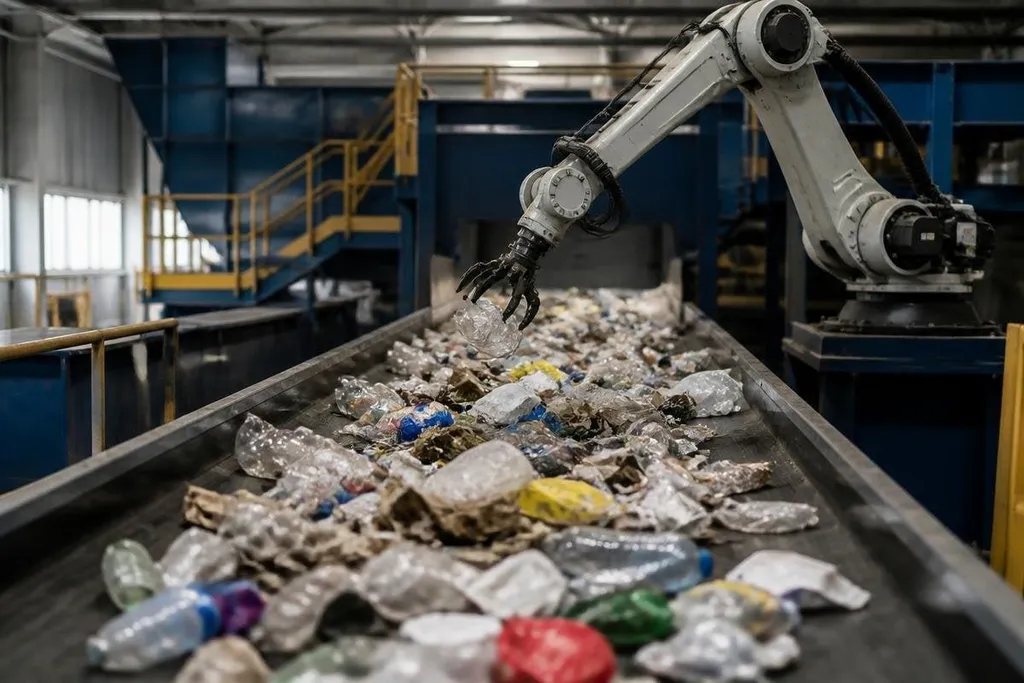
A recycling robot can pick a bottle from a moving belt, but the hard part starts when that bottle is dirty, crushed, or hidden under paper.
Future systems will need better material data and safer handling rules before faster arms bring much value to a sorting plant.
- Cameras must identify material, shape, and damage at belt speed.
- Grippers need to handle wet containers, thin film, and crushed packaging.
- Each system must show where its sorted items go and why it rejected others.
What the robots will have to see
A recycling robot needs more than an image of an object. It may need to tell PET from HDPE, read the shape of an aluminum can, or spot cardboard under food residue. A color camera can show surface detail, while near-infrared sensing can help separate some material types by how they reflect light.
That information has to reach the robot before the item passes the picking point. The system must estimate the object’s position, choose a gripper path, and place the item in the correct chute. A small delay can send a good item into the wrong stream, where it may lower the quality of a whole load.
The data also has to cover damaged items. A crushed bottle does not look like its original package, and a label can hide much of the surface. Training images that show only clean products will leave the robot weak when the belt carries real waste.
Where the arms can help
Sorting robots make the most sense on tasks that repeat all day and have a clear place for each item. An arm can pick a known container type, remove a visible contaminant, or move rejected material away from a clean stream.
That work can reduce the need for people to reach into moving waste. It does not remove the need for people. A technician still has to inspect sensors, clear jams, check grippers, and respond when the feed changes.
Sorting waste puts a robot’s sensors, gripper, and plant workflow under the same load. If you’re comparing recycling machines with other automated systems, Robot24.com robotics coverage can connect a claim to the machine, test site, date, and result. Those details matter before the belt’s limits come into view.
The limits are on the belt
Mixed waste is a poor test for neat product demos. Food residue can change an object’s appearance. Plastic film can wrap around rollers.
Glass can break during handling. Batteries can create a safety hazard when they enter a stream that was meant for ordinary packaging.
A robot also needs a clear answer when its sensors disagree. Sending an uncertain item to a reject bin may protect material quality, but it can reduce the amount recovered. Sending it into a valuable stream may raise the recovery rate while adding contamination. The plant has to choose that rule before the system runs.
The open question is not whether an arm can pick an item. It is whether the full line can keep its sorting rules stable when the waste changes by season, region, and collection method. That requires records from the belt, not a single score from a test set.
What a recycling plant should ask first
A site can screen a proposed system with a short list before it discusses purchase price:
- Name the stream: State the material mix, belt speed, moisture, and common contaminants the robot must handle.
- Check the proof: Ask for results from waste that matches the site, including crushed and dirty items.
- Measure rejects: Record how often the system sends useful material to the wrong chute or reject bin.
- Plan the stop: Confirm how a worker stops the arm, clears a jam, and restarts the line safely.
- Price the upkeep: Include gripper parts, sensor cleaning, software support, and technician time.
Those checks connect the robot to the plant’s real work. A high pick rate has little value if operators spend each shift cleaning sensors or removing film from the conveyor.
What happens next
The better systems will earn their place through site records: the material types they sort, the errors they make, the time they run, and the work people still handle. I'd fund a recycling robot only after it shows those results on the waste stream it will actually receive, because a fast arm cannot fix poor input data.
The next useful benchmark is a shared test that includes dirty, crushed, wet, and partly hidden items, then reports recovery and contamination together. Until plants can compare those results, the future of recycling robots remains a question of evidence, not arm speed.